R&D

Process development at the speed of silicon

Ark’s world model simulates your process before you run it. Your lab runs only the experiments that teach it something new, and every program starts from everything you’ve learned.

Talk to us

Reach IND sooner

Each new molecule starts with predictions on day 0, drawn from everything your organization has learned. A few rounds of experiments set the recipe, and the process is built to hold at scale from the start.

Characterize the process at its edges

The model maps the design space and finds its boundaries. Lab work goes only where it tests robustness and produces the data regulators need. As regulators accept more model-based evidence, the lab work keeps shrinking.

Transfer with confidence

Before you move to a new scale or site, simulate how the process will perform there. Problems show up in simulation instead of in a 2,000-liter run.
Most labs work at level 2.
Ark takes you to level 4.

Every step of your plant in one model, and every handoff between them. Ark models each unit operation and how it feeds the next, so the agents see how a problem in one step will land in the steps after it.

1. One factor at a time

Change one variable and see what happens.

2. Statistical DoE

Plan a large study up front, then analyze it weeks later.

3. Model-based DoE

The model picks the runs that will teach it the most.

4. Closed loop

The model designs, the lab runs, and the model learns, continuously.

Your scientists stop running routine studies and start deciding which questions are worth asking. Where this goes: a new molecule developed in about ten experiments.

Already happening in the lab

+43%

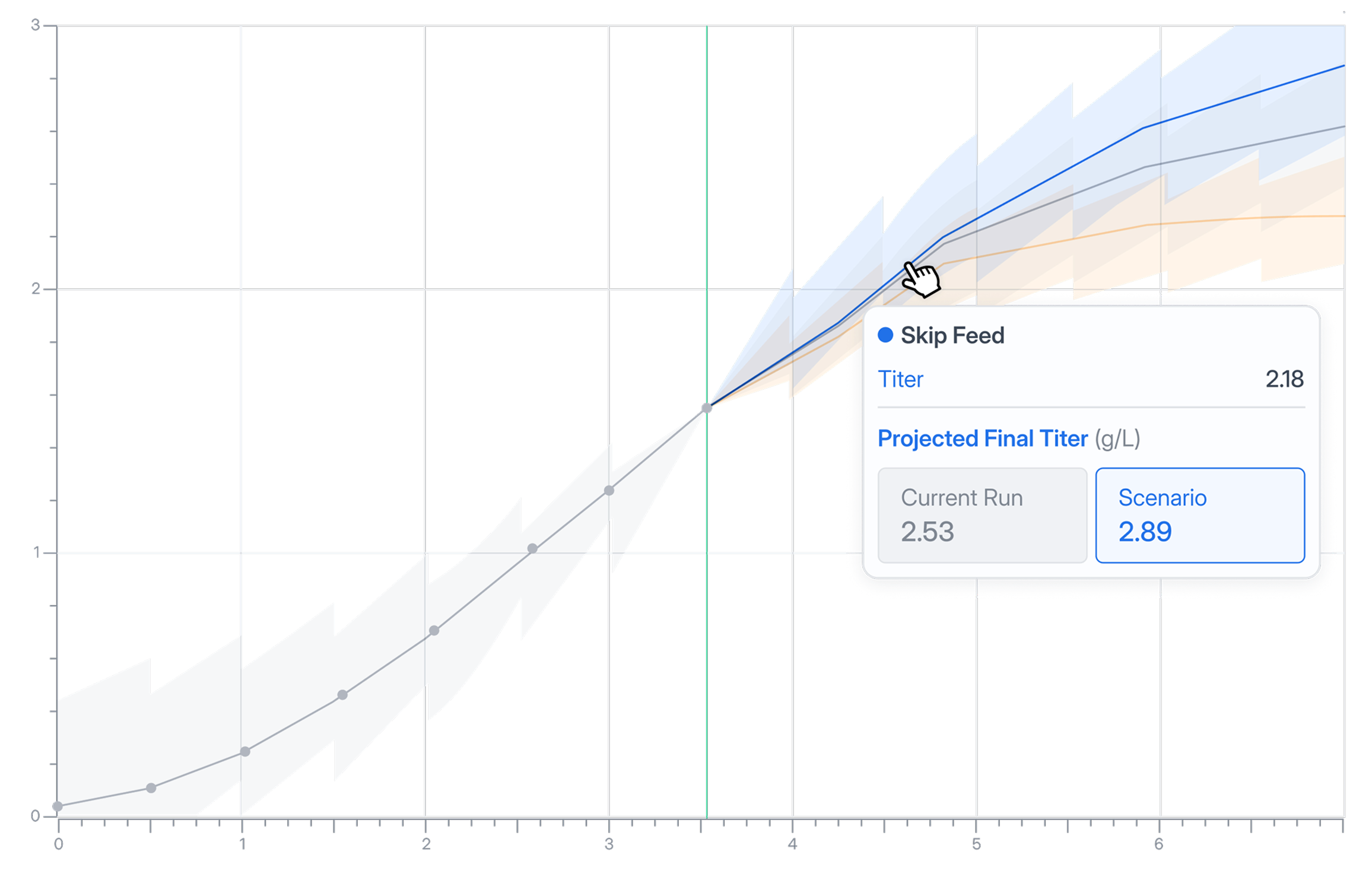
titer above a program’s historical best, using real-time optimization

Case Study

Real-time optimization chart projecting final titer for a run

+110%

titer with Ark’s model-based DoE, against +40% from statistical DoE on the same molecule

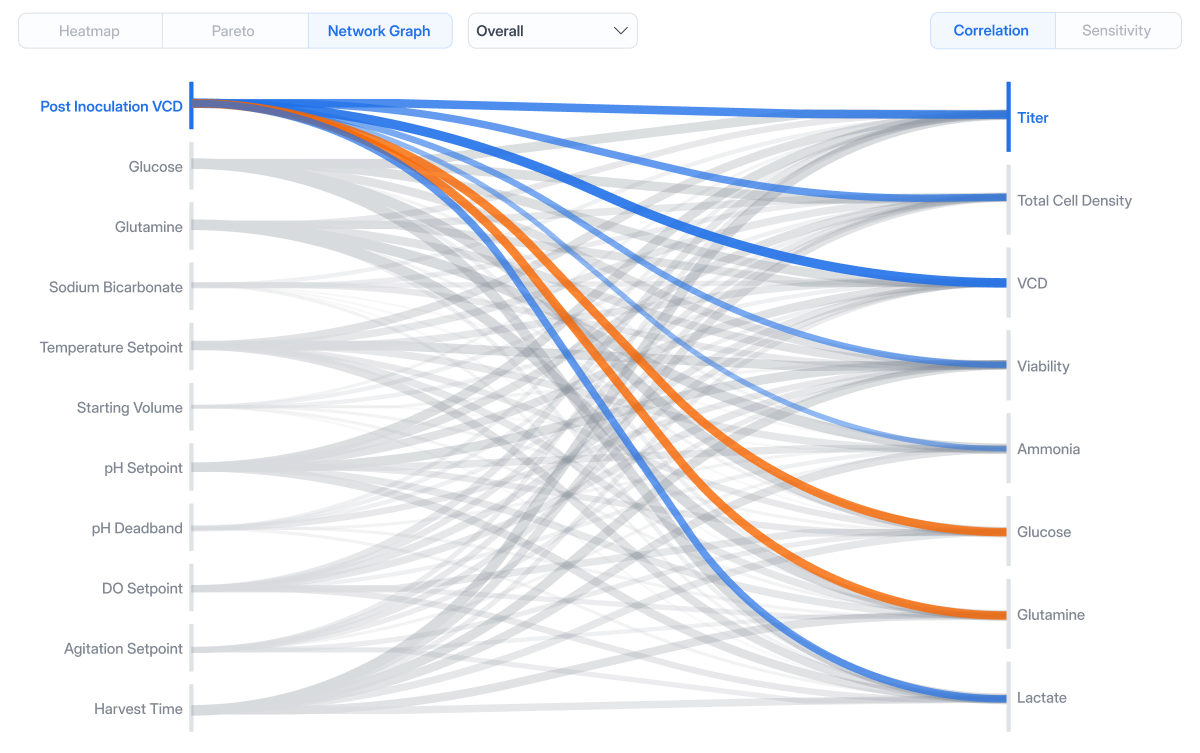
Network graph linking process parameters to titer and other outcomes

Hours

vs. three months of scale-up troubleshooting, replaced by simulation. The next scale-up succeeded.

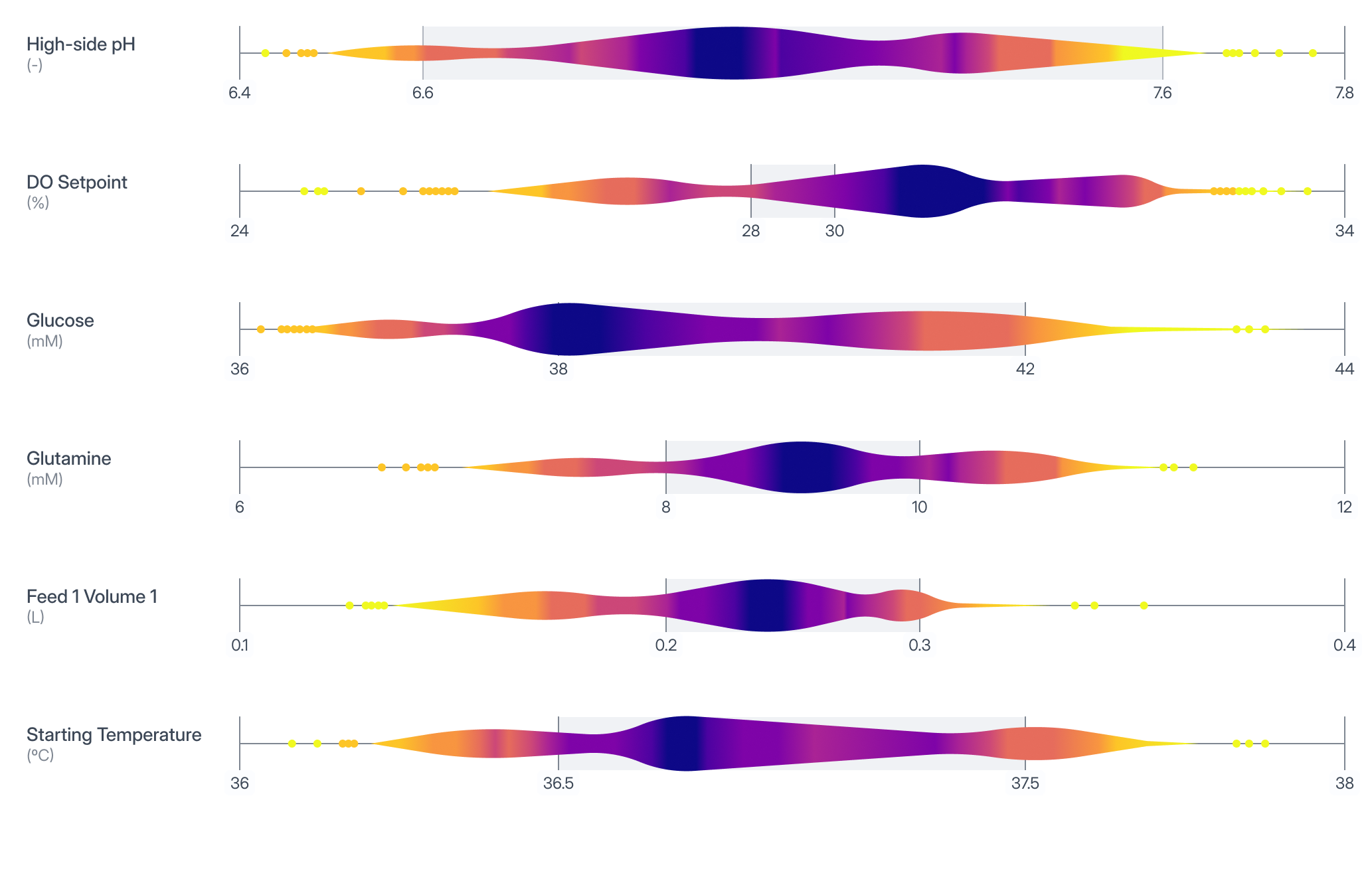
Sensitivity distributions for process parameters such as pH, DO setpoint and glucose

Why Ark

A world model built on physics

Ark’s model starts from the physics of the bioreactor and the biology of the cell. That lets it predict conditions you’ve never run, where purely data-driven models can only guess.

Data cleaning that finishes

Most bioprocess AI projects stall on messy data. Data Wizard’s agents check every data point across your historian, ELN and LIMS. Your scientists confirm the fixes, and you own the clean database.

A digital twin that makes decisions

It turns predictions into your next experiment and into adjustments during a run, with your team approving each step.

Ready to see what the model can do with your data?

Run your next program

the new way.

Give your plant an

army of agents.